The Arsenal of Mithrall
The longest look yet at how Mithrall plays. The full melee arsenal, eight schools of magic with a real healer role, physics-based archery, confirmed dwarven engineered firearms, a crafting quality ladder with the maker's mark, the material tiers (and the wood and stone ones we think are missing), plus a first look at freshly drawn dwarven shields.
Last time, you met the seven peoples. Today, what they carry into the dark.
This is the longest look we have given you at how Mithrall actually plays. Weapons, magic, crafting, the systems that decide a fight and the ones that decide a wardrobe. It is a lot, so settle in.
The usual honesty first. Everything below is in production. The art is our first concept pass, hundreds of pieces of it, and some of it will change before you hold it in-game. A few of the systems are still moving under our feet, and we will be honest about which. That is the whole point of a devlog.
One rule above all: you are what you wield
Mithrall has no classes. It never will.
There is no warrior, no mage, no ranger on a character sheet, because there is no character sheet. Pick up an axe and you are an axeman. Sheathe it and draw a fire staff and you are, in that moment, a mage. Put the staff away and lift a bow and you are an archer. Your hands decide who you are, second to second, and you can change your mind mid-fight.
That leads to the pillar we care about most: skill first. Easy to learn, hard to master. A brand-new dwarf can fight competently with two things, an attack and a block. A veteran of a thousand duels is doing something that looks like the same two buttons and is, in truth, a different language: reading windups, baiting parries, dragging a swing a hair late so it lands after your guard drops. The floor is low on purpose. The ceiling is very, very high on purpose.
And the promise underneath all of it: your gear gives you options, never a win. No weapon, no tier, no polish will ever beat a better player. We will keep saying this until you are sick of it, because in a full-loot game it is the only promise that matters.
The melee arsenal
Steel is where Mithrall starts and where most fights end.
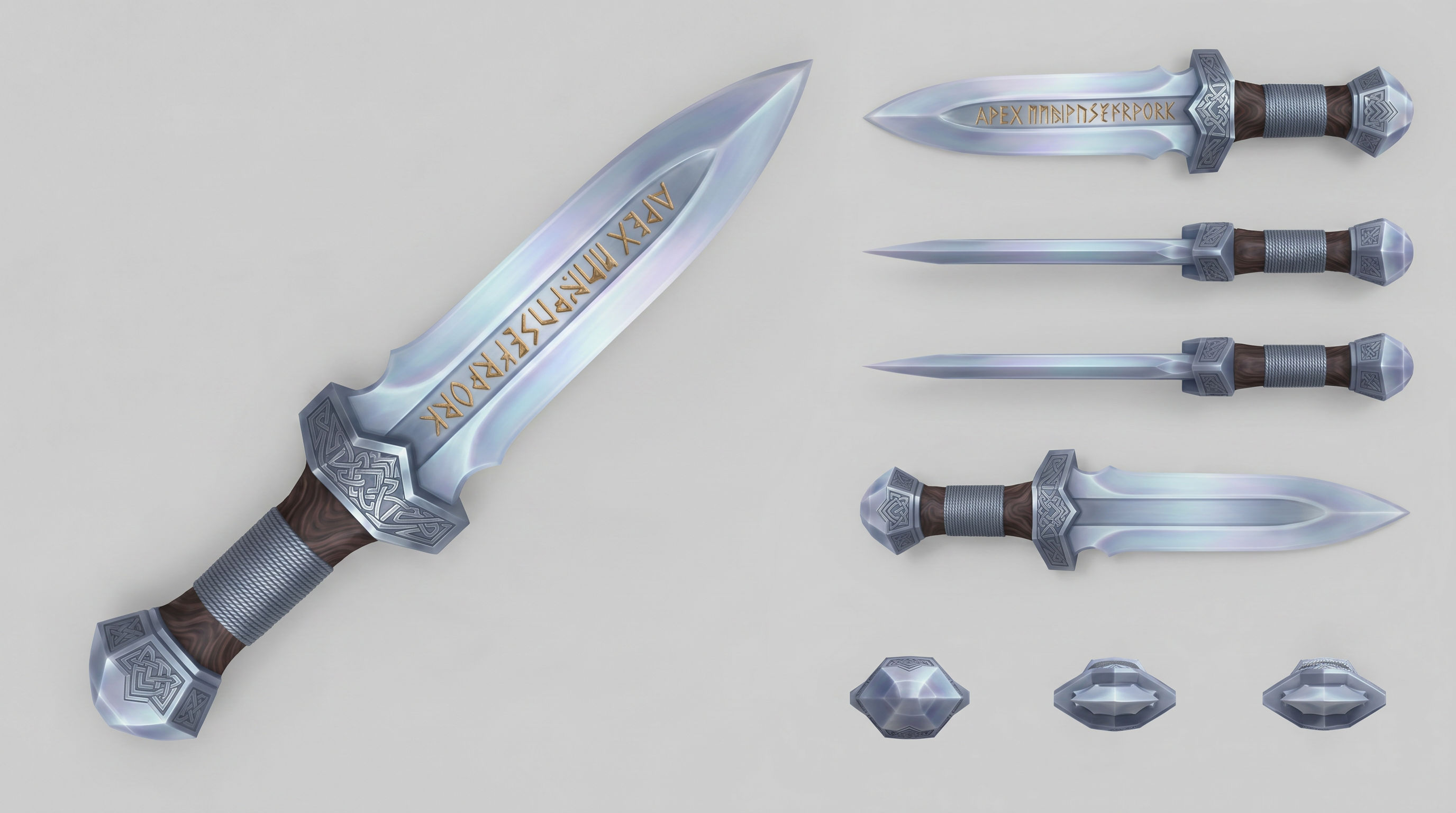
Every melee weapon shares the same honest core: three attack directions, a slash, an overhead, and a thrust, each with a mirror. On top of that grammar sits the mind game. You can feint a swing to bait a panicked parry, morph a slash into a stab halfway through the windup, and drag or accelerate a strike so it connects a beat earlier or later than your opponent expects. Defense answers in kind: a well-timed block chips your stamina, a clean parry opens a riposte, and a perfect read turns into a counter that deflects the blow entirely and hands you the initiative.
Stamina is the thread through all of it. It is one bar, and it pays for everything: attacking, blocking, feinting, sprinting. Spend it all and your guard breaks, and in the worst moment your weapon can be knocked to the ground where anyone can take it. Fights are not won by the biggest number. They are won by the fighter who still has something in the tank when it counts.
The weapon you choose sets the feel of that whole exchange. A dagger is fast and forgiving to swing and asks you to get close and stay there. A spear keeps everyone at arm's length and punishes anyone who closes carelessly. A two-handed maul is slow and enormous and, in the right hands, an overhead that ends the conversation.
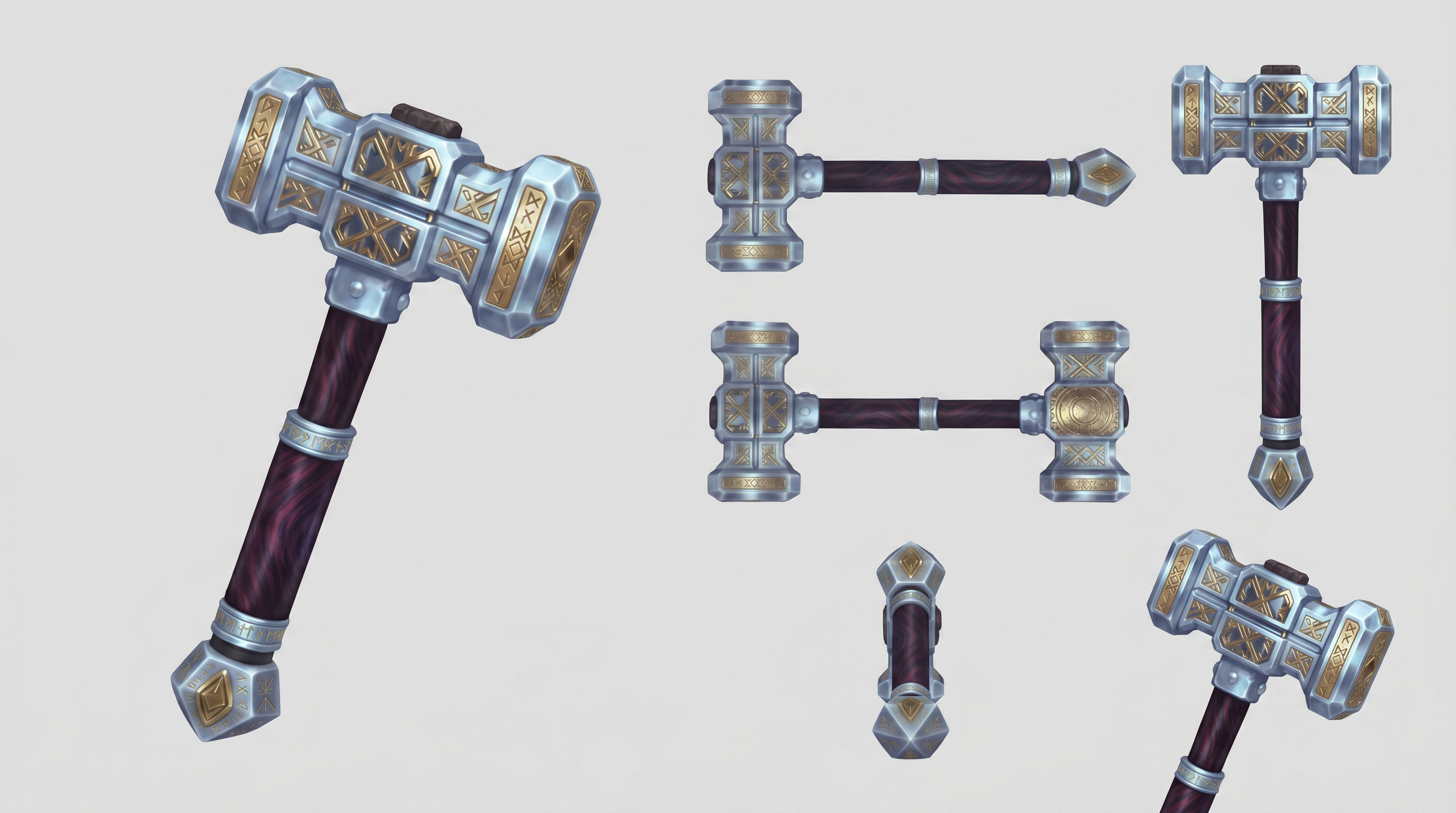
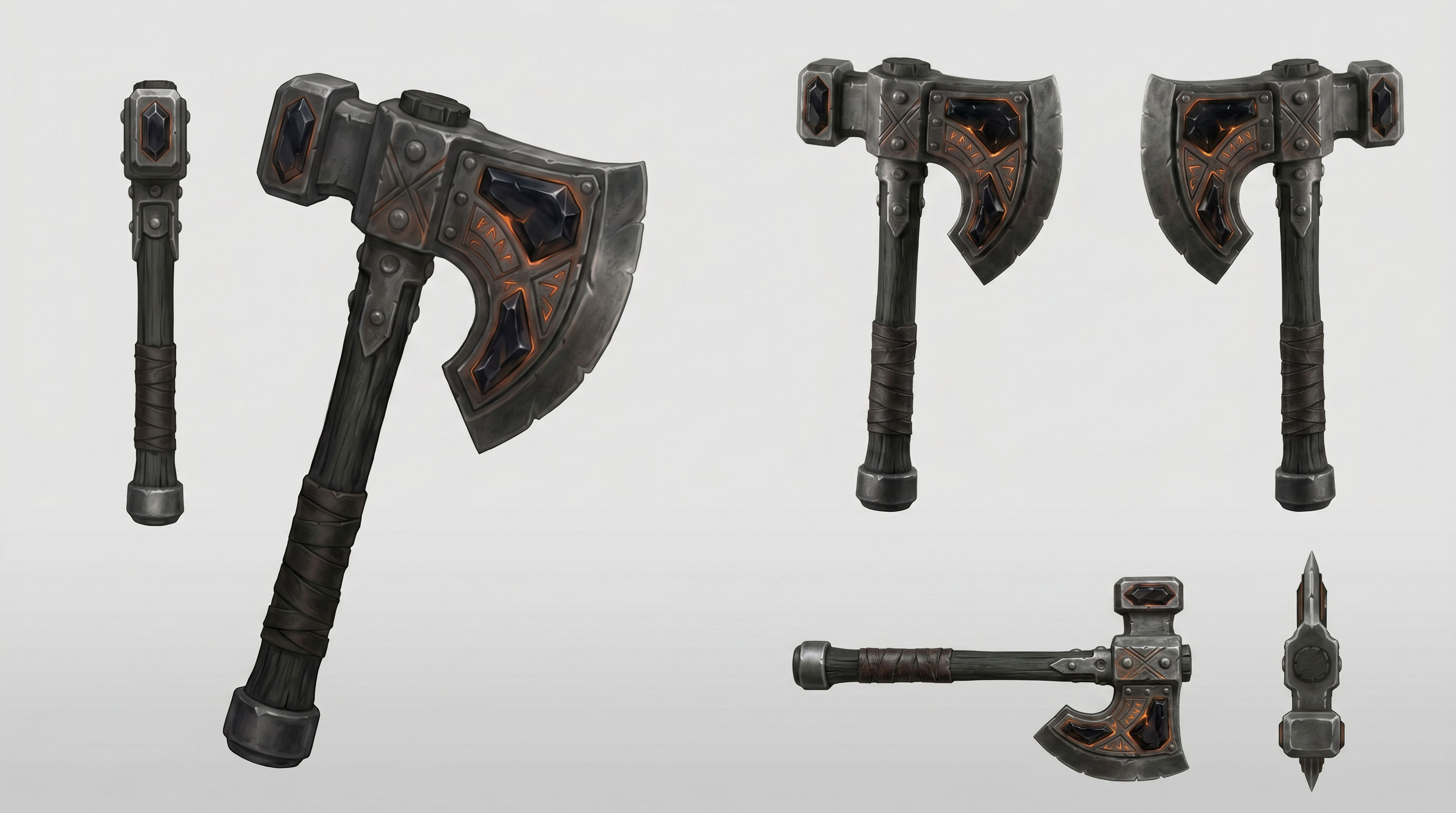
There are nine melee weapon families in the concept catalog so far, from the humble dagger up to the great two-handers, each with its own reach, weight, and rhythm. And some carry the mark of the people who forged them. This is a Volzar war axe, born of the volcanic west you met last time, obsidian and ember worked into the head:
Magic is a weapon, not a class
Here is a reveal we have been holding: magic in Mithrall is a full weapon category at launch. Not a locked archetype. A staff you pick up and put down, exactly like the axe.
There is no mana. We are done with mana bars. A staff's spells are on cooldowns, the way a weapon's abilities are, and the same stamina that fuels your sword fuels a charged cast. Click to sling a bolt of your element, hold to charge something heavier, and let the staff's real spells fly on their own timers. Draw the staff, you are a caster. Draw your axe, you are not. Nobody is ever trapped in a role.
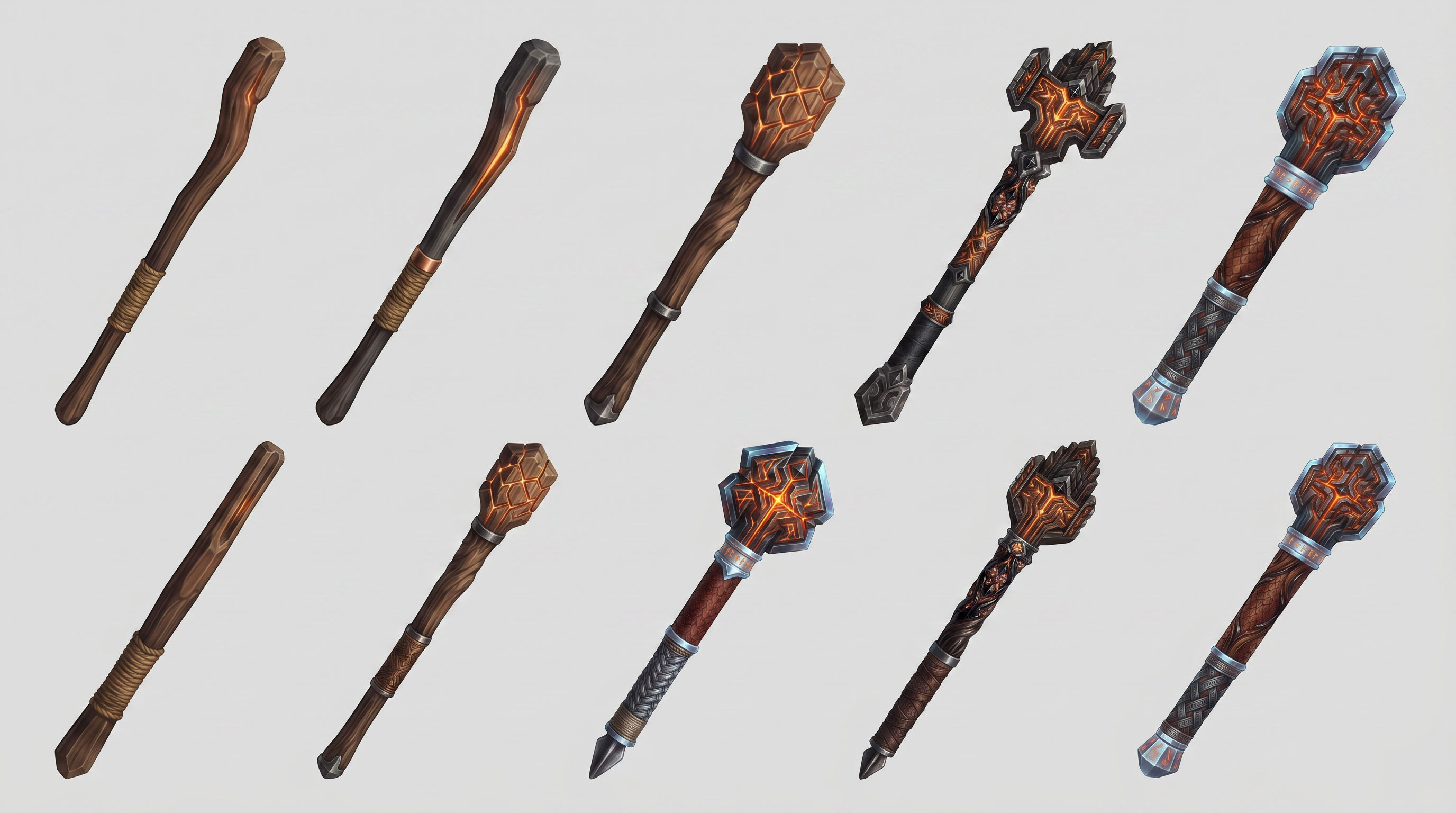
There are eight schools, each with its own identity and its own line of staves across every tier:
- Emberzul, fire, the school of burst and area pressure.
- Rimekhal, frost, control and attrition, slowing a fight to your pace.
- Vahlmun, healing, the real thing, a dedicated support that mends allies.
- Ankhaz, arcane, precise and strange, the art the Ancients left behind.
- Grothun, nature, roots and terrain and green pressure.
- Solvahl, light, vertical strikes and zones that punish and protect at once.
- Morgkul, shadow, curses and drains that eat away at an enemy over time.
- Vhorrak, storm, tempo and reach and reactive lightning.
That healing school deserves a pause, because it is a genuine reveal. Healing is a viable, dedicated role in Mithrall, and it is a staff, not a class. Anyone can pick up a Vahlmun staff and keep a friend alive, and anyone can put it down. It is powerful, not oppressive: every heal is a visible cast, so a healer who is not protected gets punished. Support you can see, and interrupt.
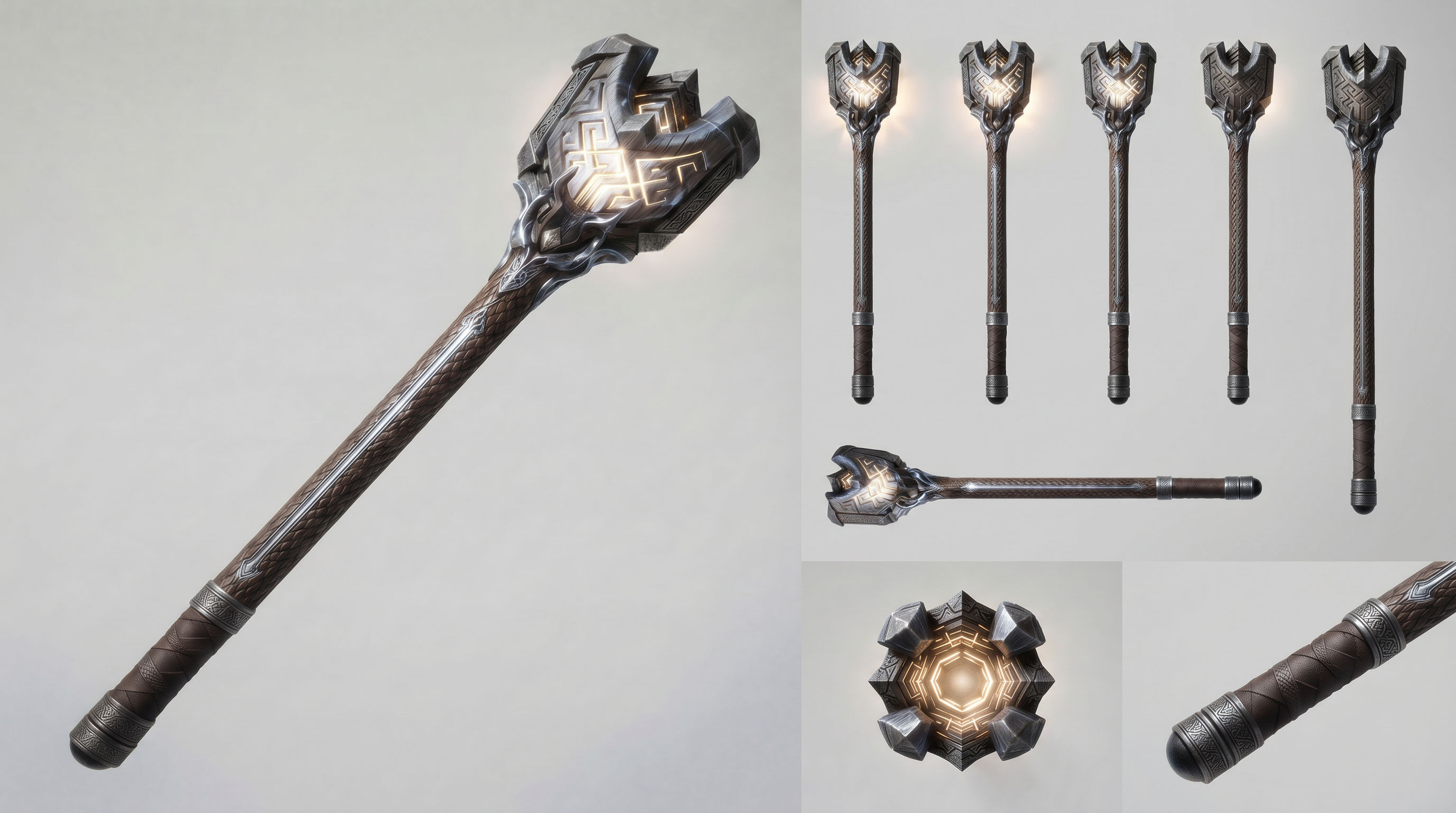
Frost tells the opposite story, cold and patient, a school built to take the speed out of an aggressive opponent:
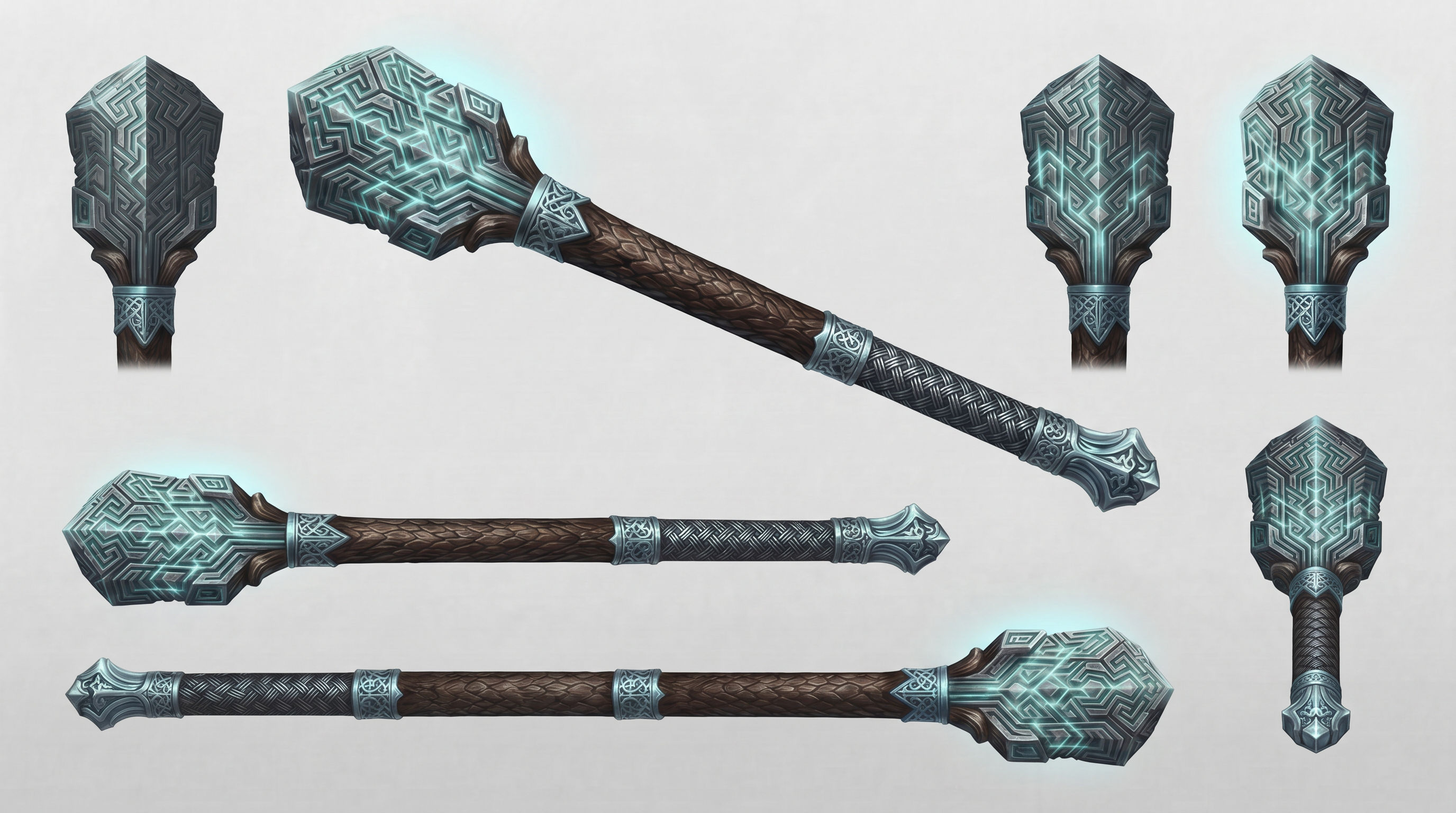
To be clear about naming: the eight school names are locked. The individual spell names you will eventually see are still placeholders while we do a proper naming pass, so we are keeping them out of this post.
Range, and why physics is your aim
Bows, crossbows, thrown steel. Ranged combat in Mithrall runs on one idea: there is no dice roll on a shot. There is only physics.
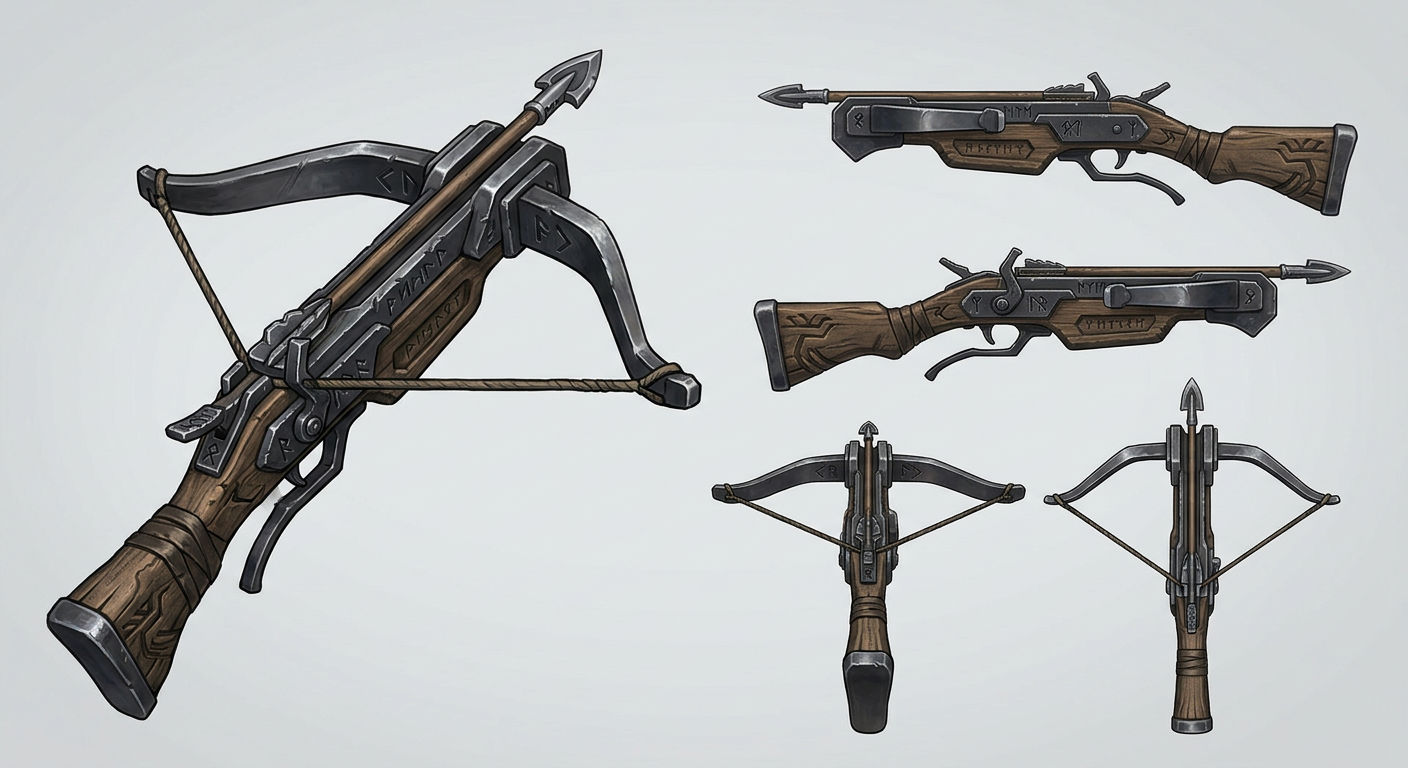
Every projectile in the game flies through the same system. Up close it is crisp and immediate. Past that, it becomes a real thing in the air, with drop, travel time, and drift on the wind. A far shot is not a percentage. It is a judgment: how far, how high to hold, which way the wind is pulling. Learning the arc of your bow past its comfortable range is the entire craft of the marksman, and it is a skill nobody can buy.
Ranged is deliberately the opener and the pick, not the whole fight. Effective ranges are modest by design, so there is no across-the-map sniper ruling a battlefield from a hill. Getting shot at tells you exactly where the shooter is, and the fight comes to them.
Engineering: dwarves and gunpowder
Dwarves are engineers. So of course they build guns.
Alongside the bow and the crossbow sits a full line of dwarven engineered ranged weapons, black powder and brass and clockwork. This is confirmed, and we are thrilled about it. A heavy hand cannon. A blunderbuss that turns a doorway into a very bad place to stand. A long rifle for the patient. And, for the dwarf who has given up on subtlety entirely, a hand-cranked gatling gun.
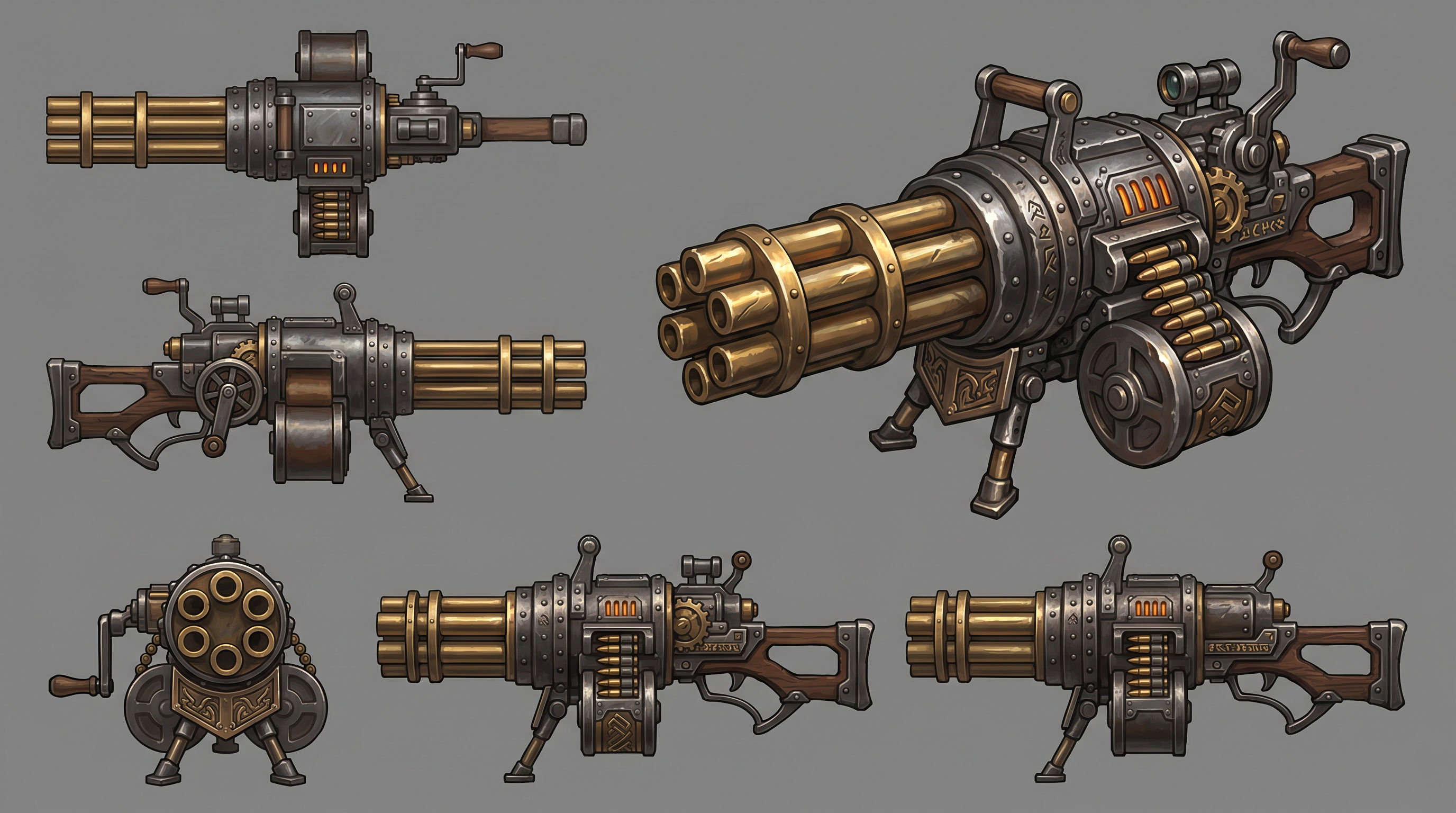
Engineering is a real weapon path in Mithrall, the loud mechanical answer to the quiet bow. The tradeoff is the whole point. These weapons are heavier, slower to bring to bear, and hungrier for materials and upkeep, and in exchange they hit like the industrial age arriving a few centuries early. A long rifle in trained hands is devastating and demanding in equal measure, never a free win, exactly like everything else in the arsenal.
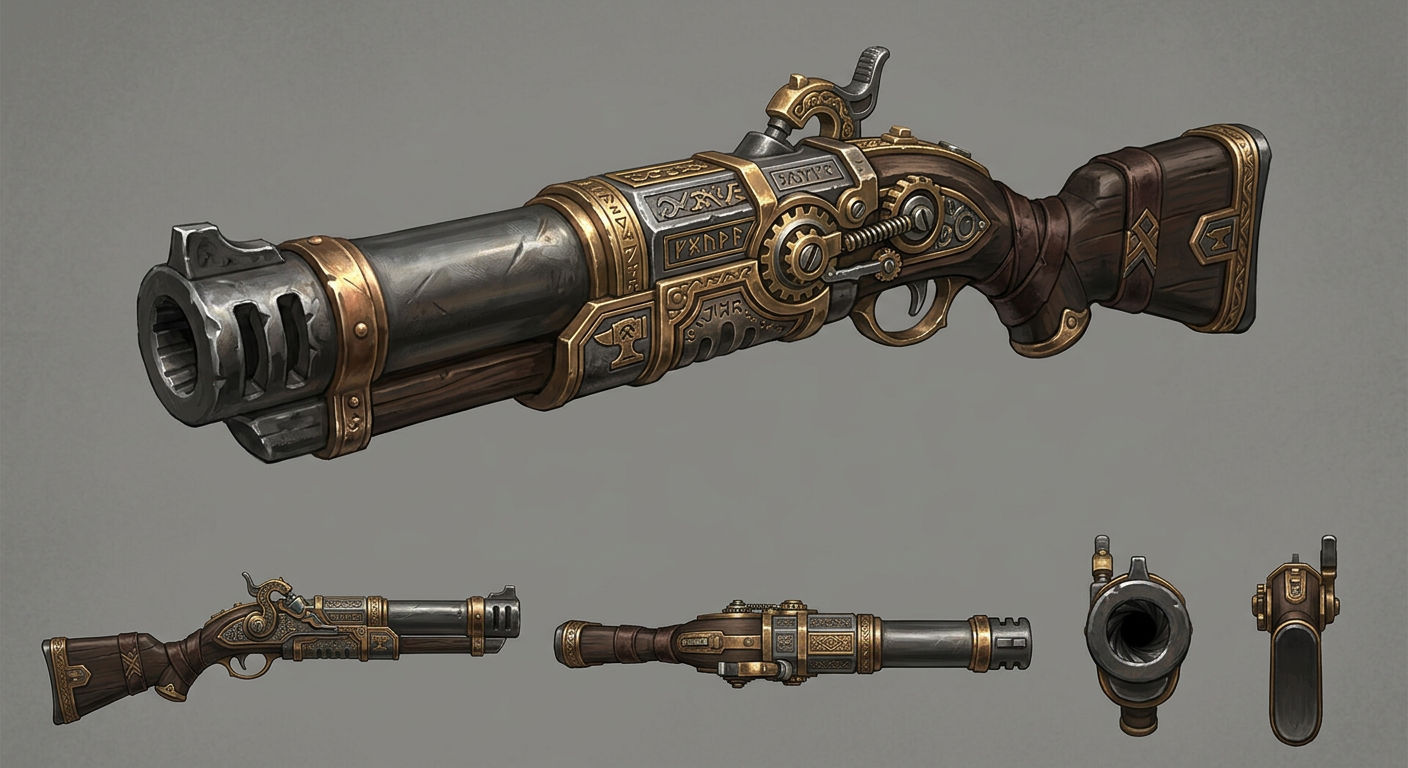
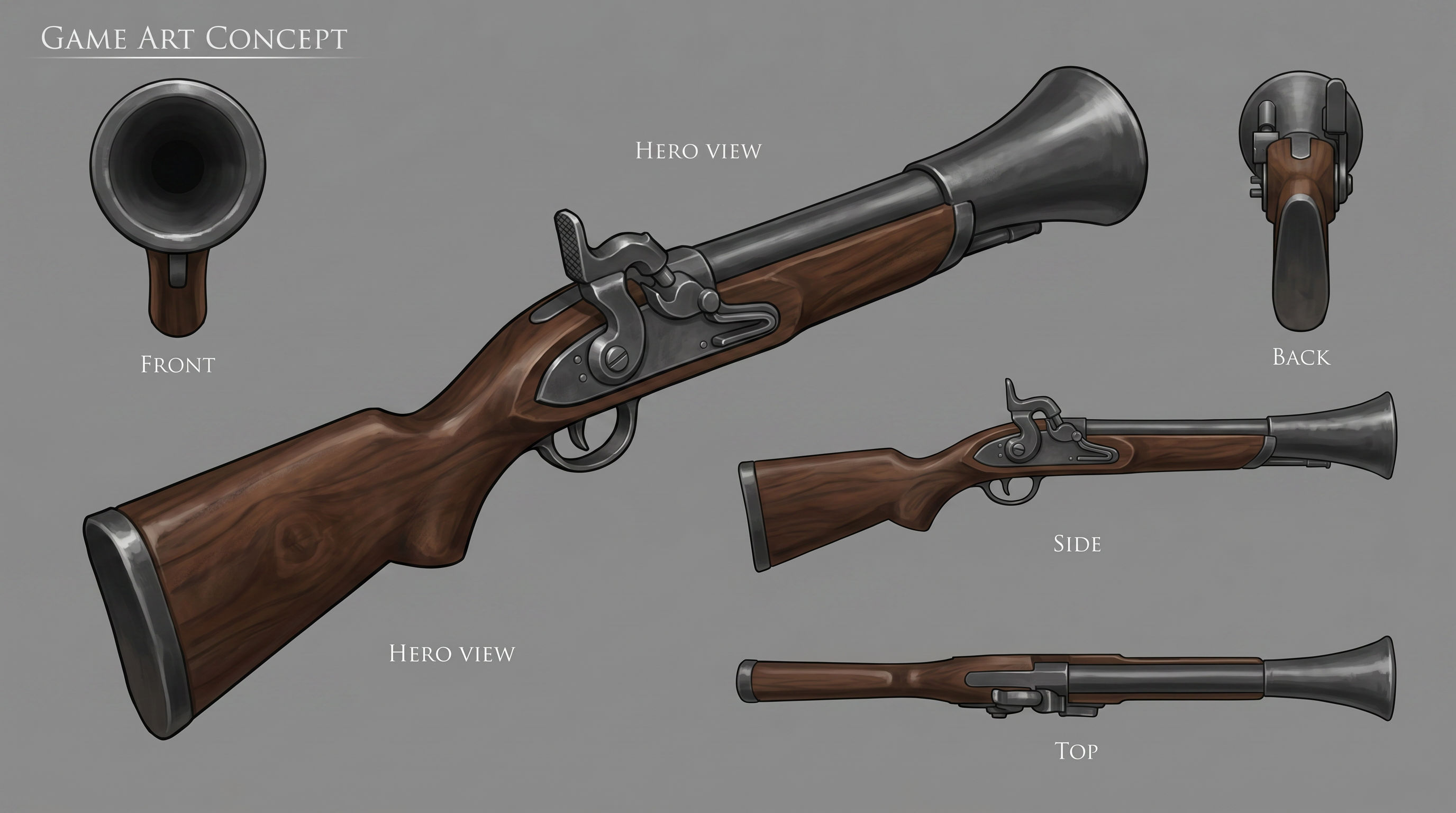
Yes, dwarves with guns. It is one of the most fun corners of the whole game, and it is in.
Tiers: the material spine
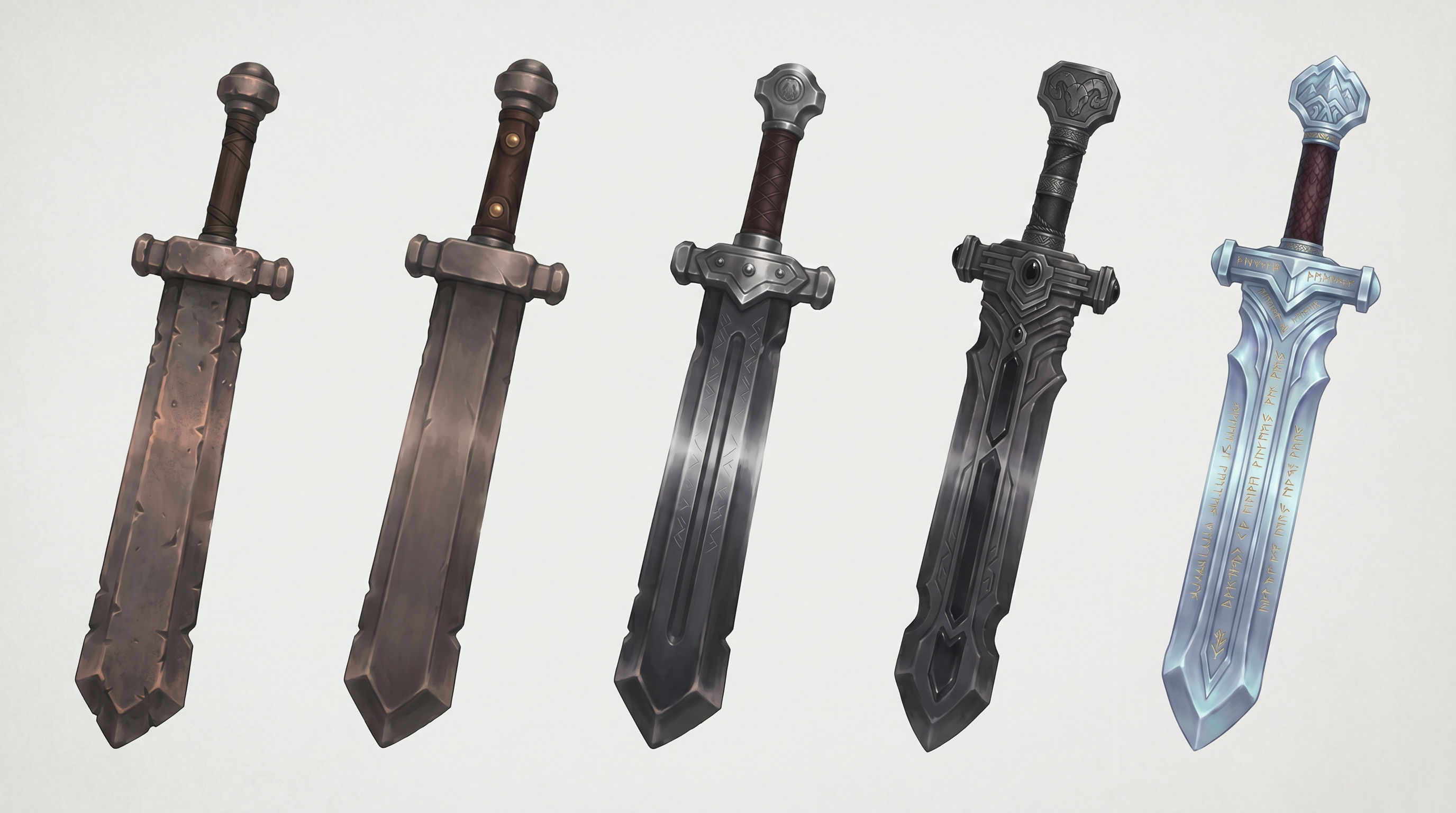
Every weapon and every piece of armor climbs a ladder of materials. Rougher metals at the bottom, rarer and stronger ones at the top, with the richest sitting out in the most dangerous corners of the map so that power is tied to risk. Here is a single greatsword walking that ladder, from crude early metal up to the apex:
Bows climb the same ladder. Same weapon, five expressions of it, humble to legendary:
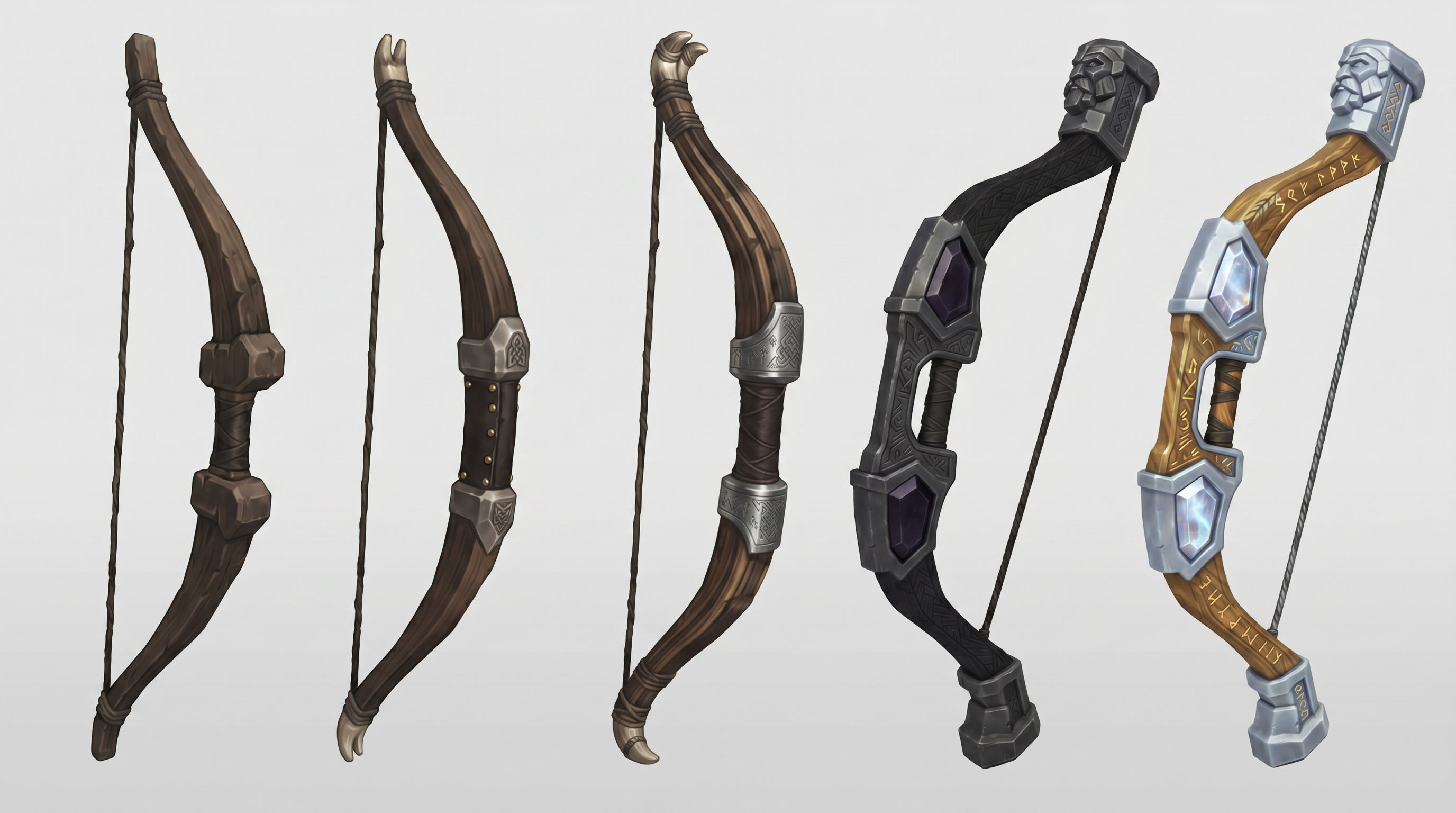
And here is the first thing still moving under our feet. Look at the bottom of that ladder. It starts at metal. We are increasingly convinced it should not, that the true first tiers are missing, and that they are wood and stone, the things a dwarf with empty hands and no forge actually makes on day one. A branch lashed into a club. A wooden training axe like this one, which already exists as a concept:
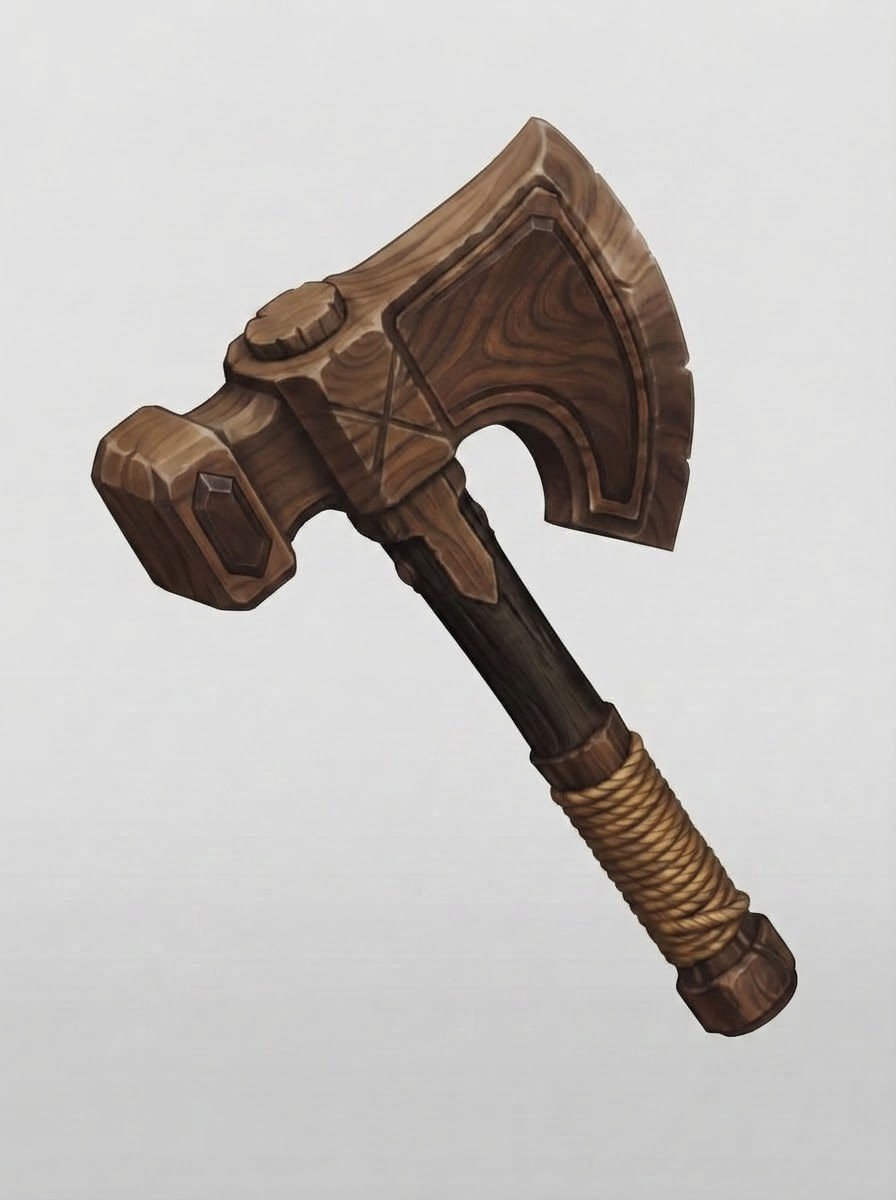
Wood and stone already run all the way through Mithrall as materials, as tools, as the grades you build your first walls from. Extending the weapon and armor ladders down to meet them, so your very first weapon is something you whittled before you ever found ore, feels right for a survival game. It is not shipped canon yet. It is a change we are talking about out loud, and this is us talking about it.
Quality, and the maker's mark
Tier is the material. Quality is the craftsmanship, and it is a completely separate axis.
Take one weapon at one tier and hand its recipe to six different smiths, and you get six results, from Crude at the bottom to the near-mythical Runeforged at the top. Here is a war axe walking that finish ladder:
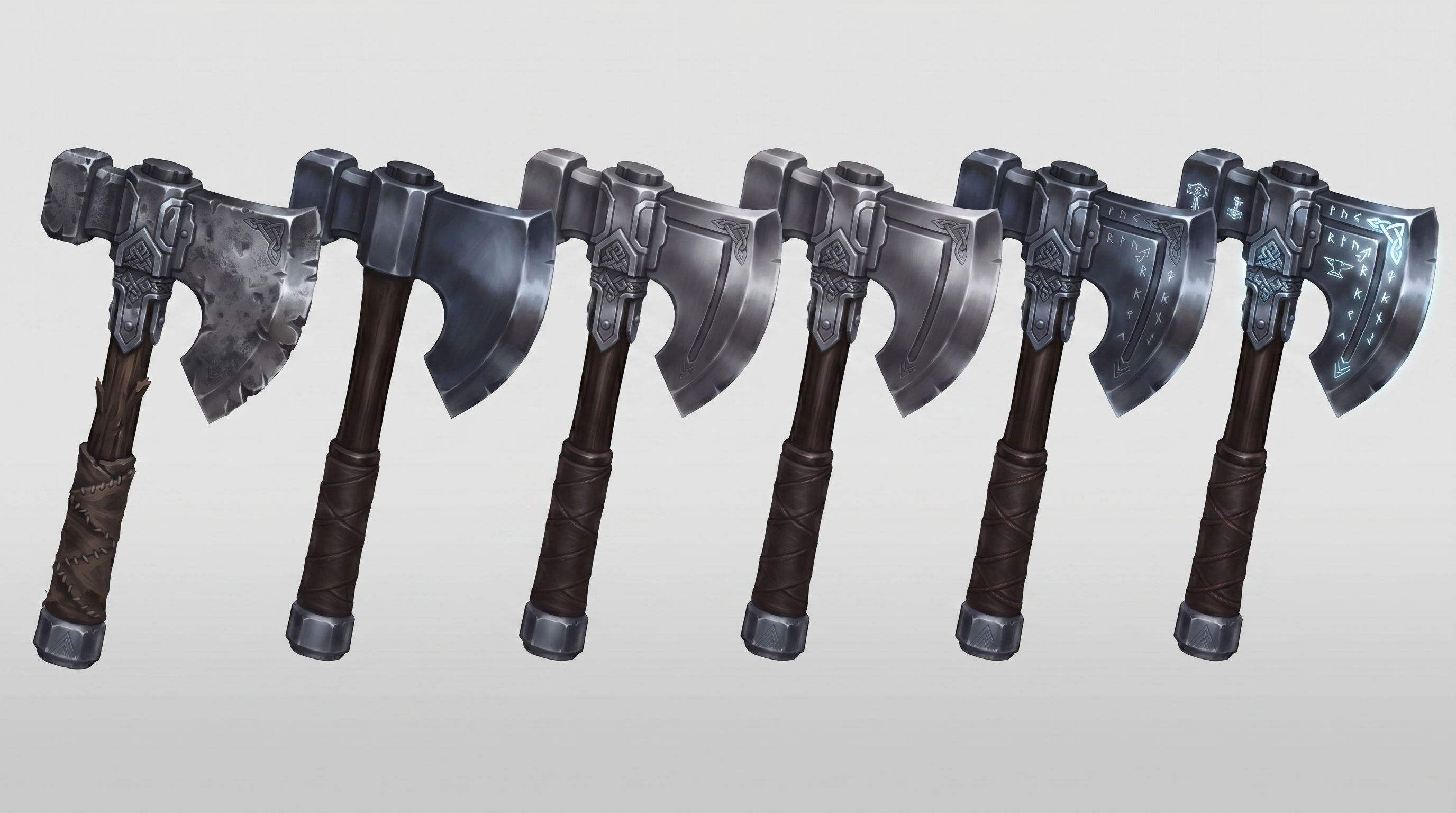
Two things matter about quality, and they are both deliberate.
First, quality is real but small. The gap from the worst finish to the best is meaningful, and it is nowhere near enough to save a worse player. A common blade in a veteran's hand beats a Runeforged blade in a novice's, every time. What quality really buys you is durability, prestige, and the economy that grows around both.
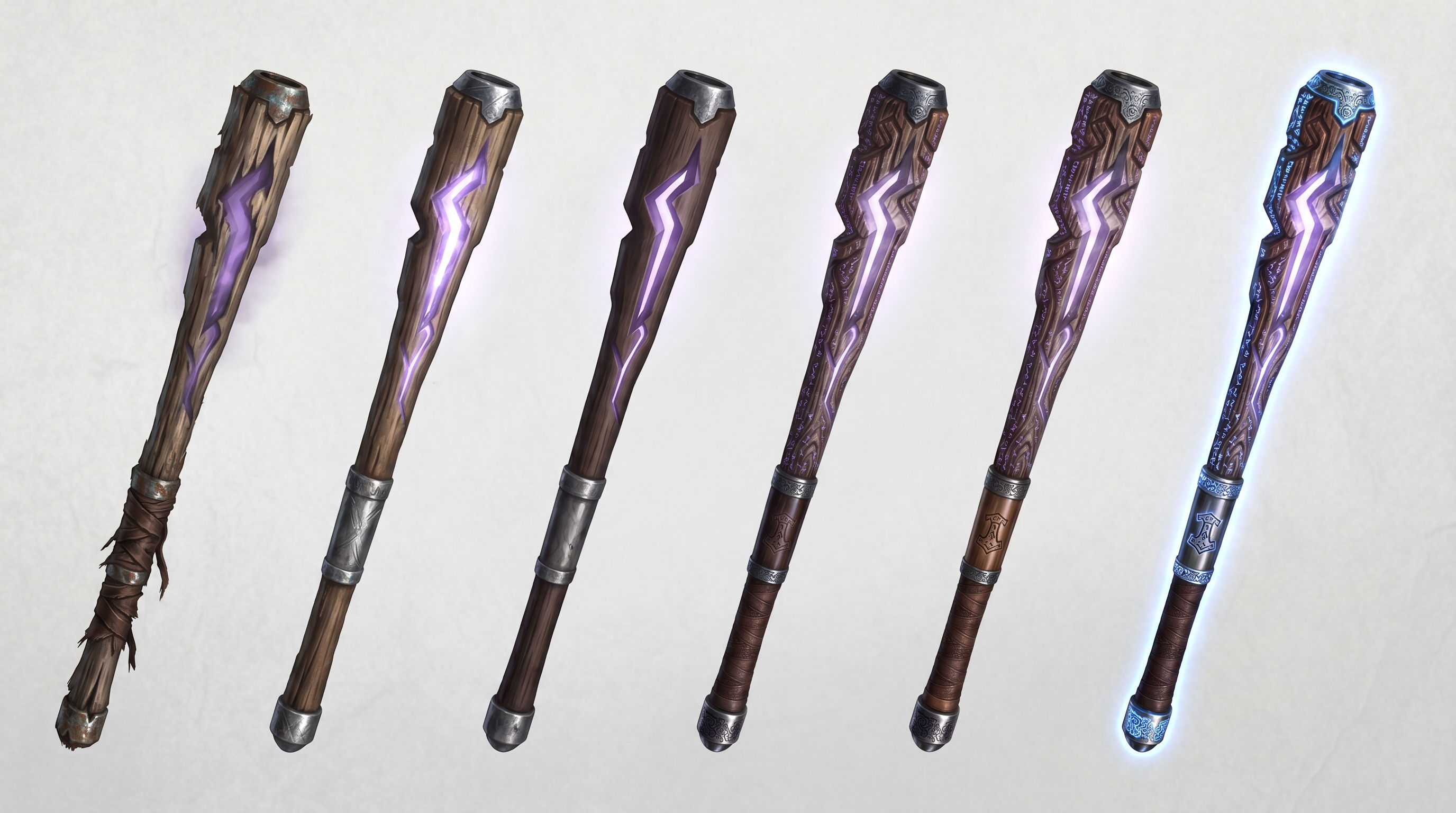
Second, and this is our favorite detail: the finest work carries the maker's mark. Reach the top rungs and the weapon is engraved with the name of the dwarf who forged it. Master crafters become brands. A blade is not just Runeforged, it is Runeforged by someone, and that name is worth something. Staves are no different, arcane craftsmanship written into the wood:
Shields, hot off the drawing board
Here is a section we could not have shown you a week ago.
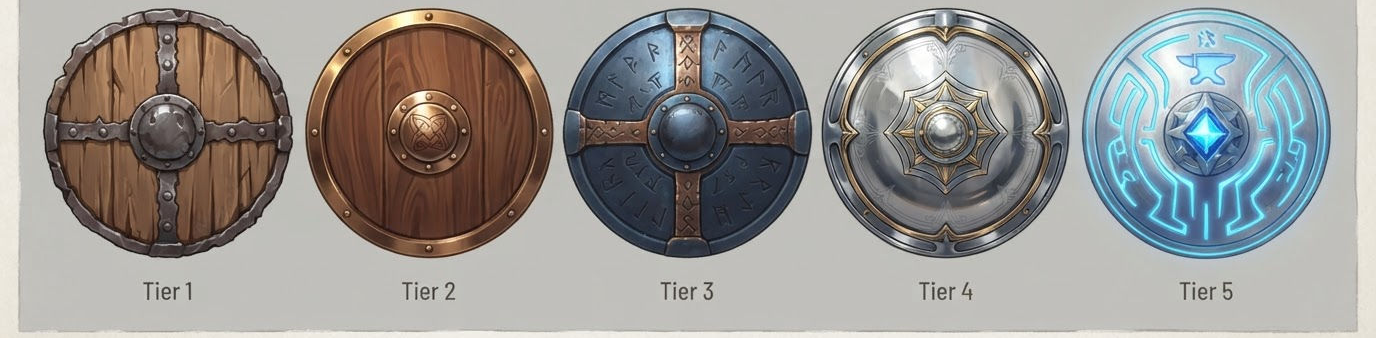
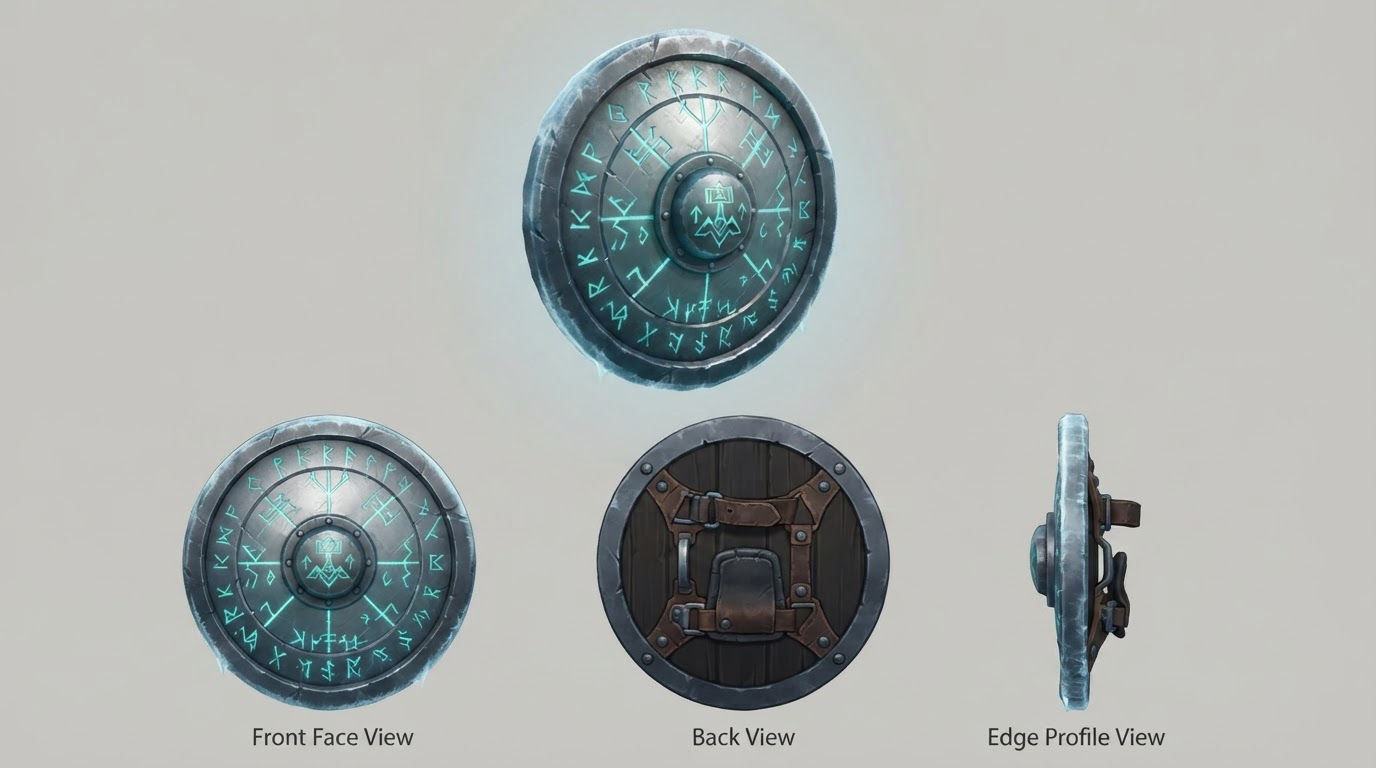
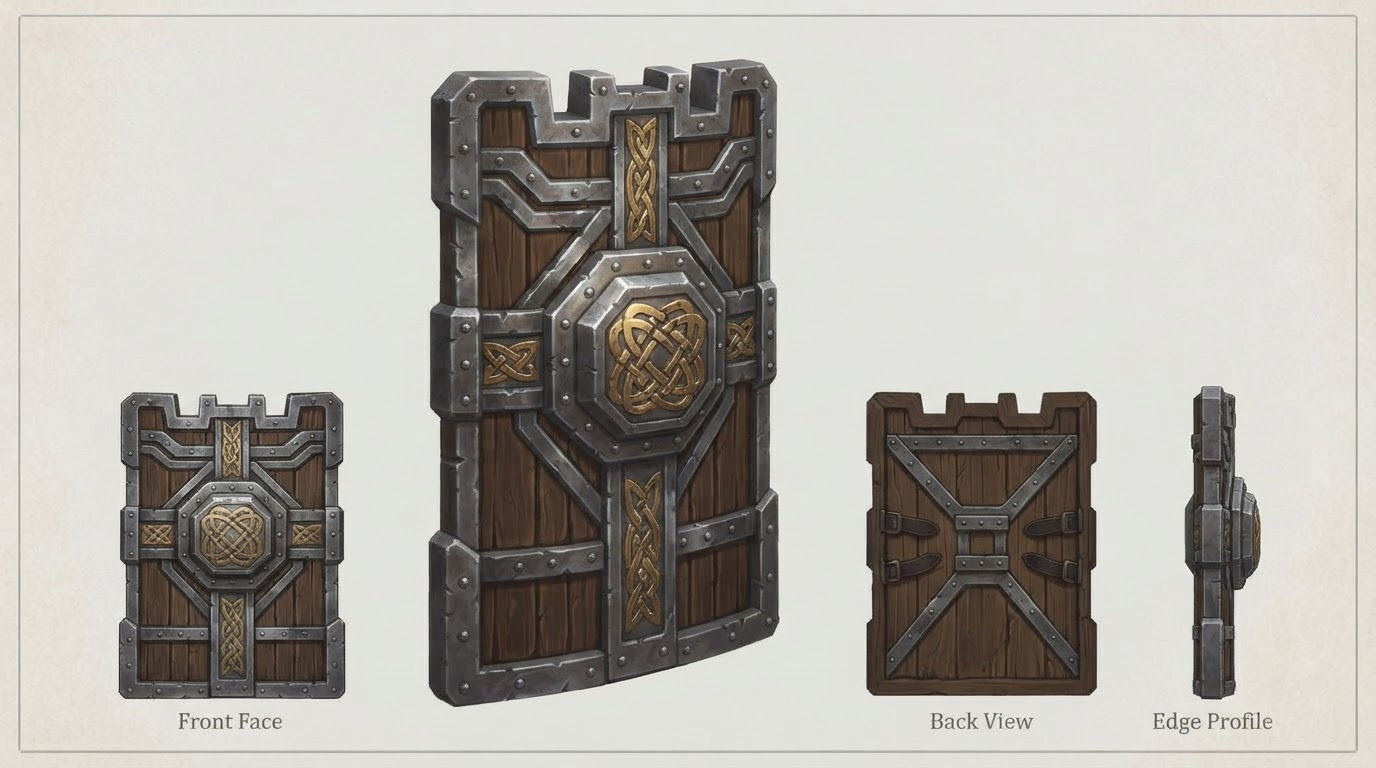
Shields have always lived in Mithrall's design. They sit in your off-hand, they carry their own block and bash and a pair of signature skills, they are the archetype for the dwarf who would rather hold a line than break one. The one thing they were missing was a face. Every other weapon had a full sheet of concept art across every tier and finish, and shields had none. So we drew them. This is the very first pass, fresh enough that the paint is barely dry, and we wanted you to see it the moment it existed.
They climb the same material ladder as everything else, humble wood-and-iron up to a glowing apex:
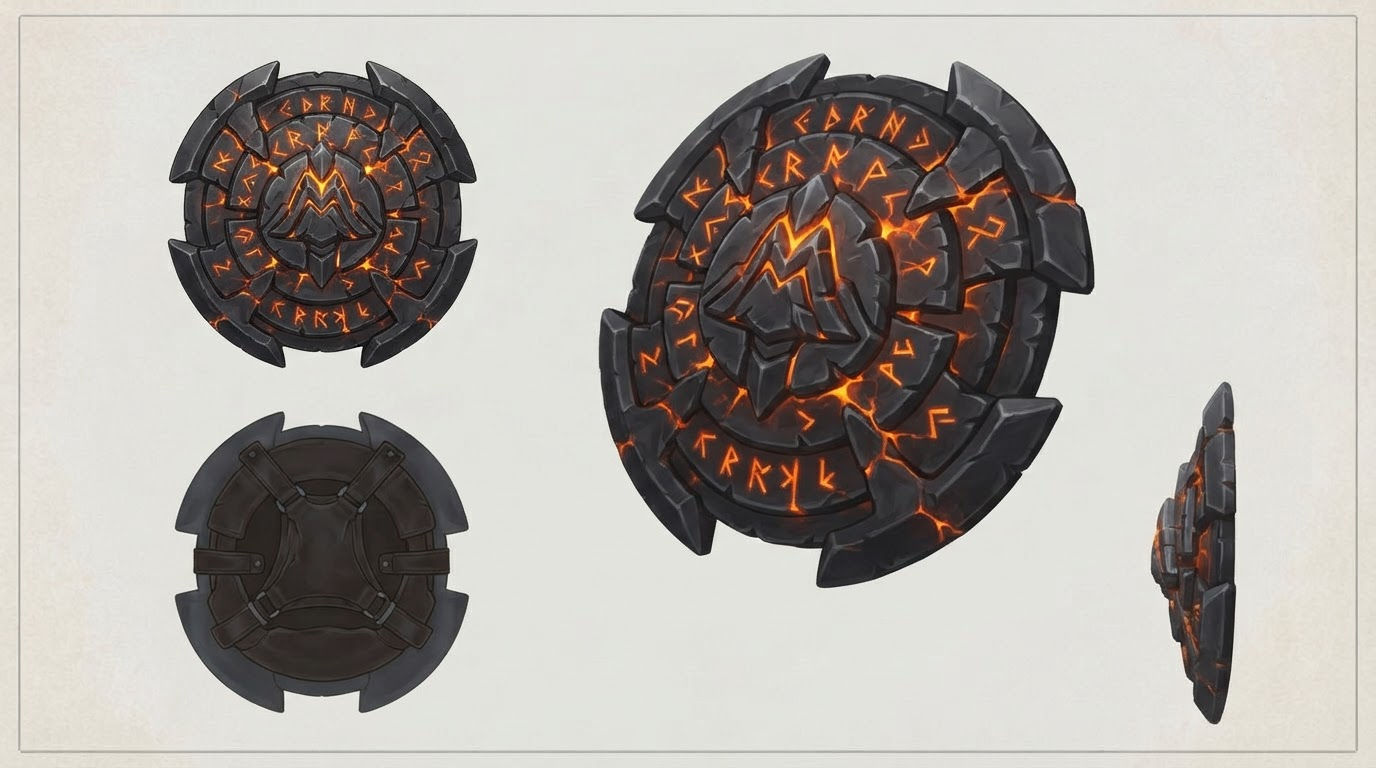
And like the best gear, they carry the mark of the people who forge them. A Volzar shield is obsidian and ember, the same volcanic craft as their war axe:
A Skral shield is the opposite temperament, pale frost-steel etched with glowing runes and a rime of ice:
And for the dwarf who intends to be a wall, the heavy tower shield, layered oak and iron built to plant in the ground and dare the world to move it:
That is a first pass, not a final word. But shields are no longer the one archetype without a face.
How it all comes together
Step back and the pieces lock into one machine.
Your hands hold your kit. A weapon or staff defines the two to four abilities on your hotbar, and swapping your gear swaps your whole playstyle, no class, no respec, no menu. What you can make comes from knowledge you earn by exploring and fighting. How well you make it comes from practice, the discipline you have actually put your hours into. And whose style it wears, which of the seven peoples' traditions is engraved in the shape of it, comes from the reputation you built with them.
Learn what to make. Make it well. Wear where you have been. Three clean questions, and your character is simply the sum of your honest answers to them. No class ever decided any of it.
Whose weapon will you master first?
That is the real question, and we would love to hear it in the Discord. Steel, spell, bow, or a gatling gun on a very bad day.
The usual close. No dates on the pieces in between, the window is still Q4 2027, and everything you saw here is a first concept pass that will keep getting better. If you want to hold any of it early, the playtest platform is open at playtest.anklebreaker-studio.com, and wishlisting Mithrall is still the single most useful thing you can do for us.
Steel, spell, or shot. Pick your hands.
- François